Pond Filtration Systems
Clearer water and steadier koi health start with a filtration system built for your pond.
Clearer water and steadier koi health start with a filtration system built for your pond.
Cloudy water, rising debris, and koi that seem less active often point to a filtration system that is not keeping up with the pond. If the water looks dull, the surface collects waste faster than before, or the pond needs constant attention just to stay presentable, the filtration setup may be undersized, clogged, or arranged for a different pond design.
At The Koi Story Fish Farm, we help pond owners in Chester, New York get a clearer picture of what their pond needs and what the filtration system is actually doing. We work with pond filtration systems as part of broader pond care, so you can match water movement, waste removal, and koi health without guessing.
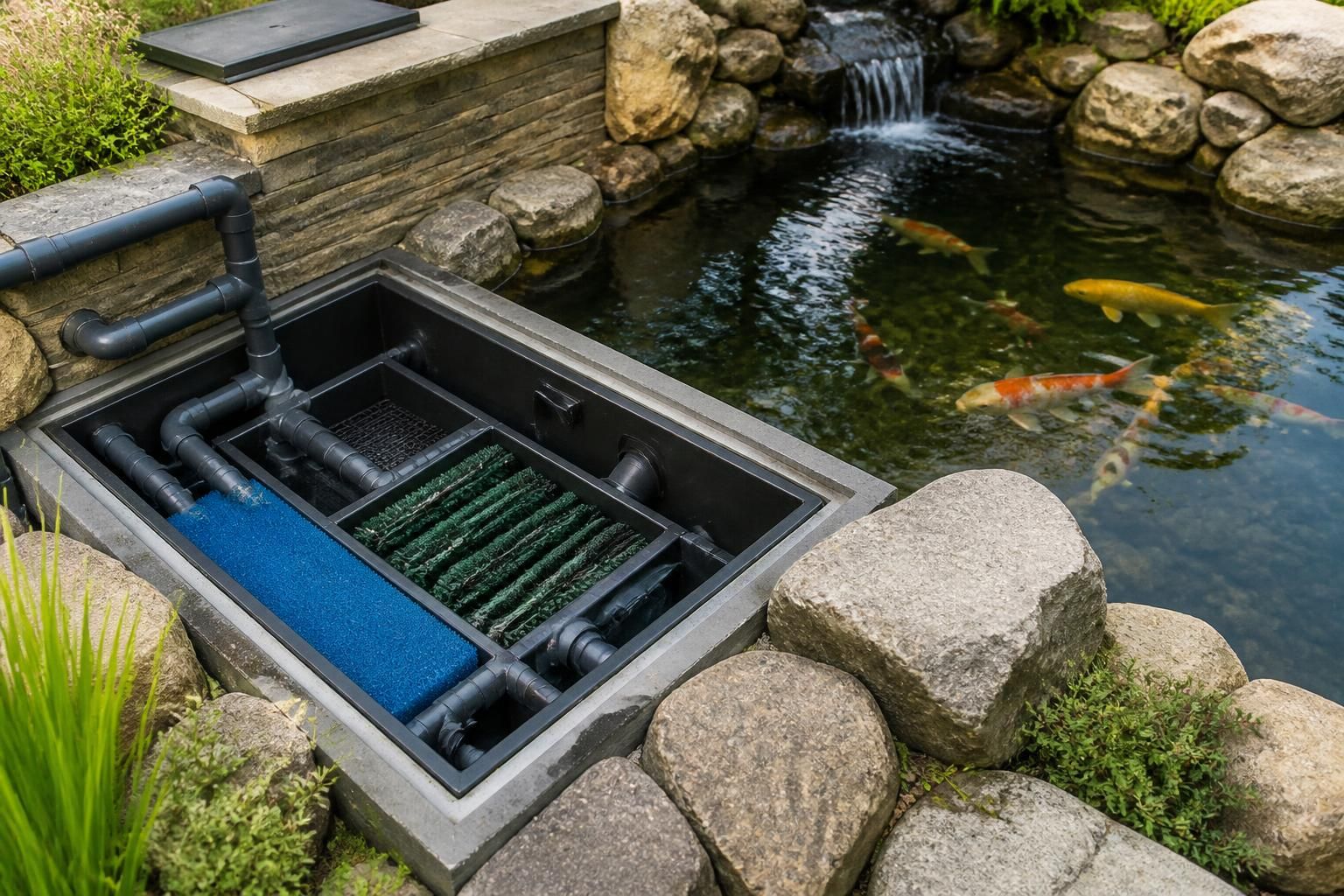
A pond filtration system should help remove waste, support water clarity, and reduce the strain on the pond environment. When it falls behind, the signs tend to show up quickly. You may see algae building sooner than expected, uneven water movement, or a layer of debris settling where it used to stay suspended long enough to be removed.
Some problems start with the wrong setup for the pond size or shape. Others begin after a renovation, a fish stock change, or a buildup of solids that never gets cleared out well enough. We look at the whole picture so the filter supports the pond you actually have, not the one it was originally designed for.
Every pond filtration system should be evaluated as part of the pond itself. The pond’s depth, shape, fish load, plant balance, and circulation patterns all affect how well filtration performs. At The Koi Story Fish Farm, we review the existing setup before suggesting changes, so the filtration supports both appearance and fish care.
In Chester, New York, many pond owners want a system that is easier to maintain without sacrificing water quality. That often means looking at how water enters the filter, where solids settle, and whether the current arrangement gives waste enough time and contact with the filtration media. A strong setup should make routine care simpler, not harder.
Different ponds need different filtration approaches. Some ponds need more waste-handling support. Others need help with circulation and clearer water flow. We help you sort through the practical side of pond filtration systems so the result fits your pond, your koi, and the amount of maintenance you want to take on.
When people are planning a new pond or improving an older one, filter choice should be tied to the overall design. A filter that looks fine on paper can still fall short if the pond shape creates dead spots or if waste tends to collect in one area. The right setup helps keep the water cleaner and the fish environment steadier.
Helps remove solids before they break down and affect water quality.
Supports circulation so the pond does not develop stagnant areas.
Reduces suspended debris that makes the pond look dull or murky.
Makes routine cleaning and checking less complicated.
If you are building a pond, filtration should be part of the design from the beginning. That includes thinking about where water will be drawn from, where it will return, and how waste will be directed to the filter. A pond built without those details often needs more correction later.
We handle pond design and construction as well as filtration support, which helps the finished pond work as one system. For customers in Chester, New York, that means fewer surprises after the pond is filled and stocked. Good planning can reduce the need for major changes once the koi are already living there.
Older ponds often need filtration improvements after years of use, added fish, or changes in appearance goals. A pond that was once easy to maintain may now need stronger waste handling or better circulation. Renovation can be the right time to update the filtration system so the pond becomes easier to manage again.
The Koi Story Fish Farm helps identify whether the issue is the filter itself, the placement of the filter, or the overall pond layout. Sometimes the best result comes from adjusting the system rather than replacing everything. We look for changes that support the pond without creating more work than necessary.
Pond filtration systems work best when they are checked and cleaned before buildup becomes overwhelming. Regular care keeps the system from getting buried under waste and helps you notice changes early. That matters because many filtration concerns begin as small slowdowns that are easy to overlook.
We also help with pond maintenance, including parasite and bacteria identification and control. When filtration is part of the discussion, the goal is not only cleaner water but a better overall environment for koi. Water quality, waste removal, and fish health all affect one another, so small changes can make a real difference.
Filtration is not only about appearance. It also plays a major role in how comfortable koi are in the pond. When waste builds up or circulation drops, fish can show stress before a homeowner realizes the system is struggling. That is why filtration should be considered alongside koi health consulting, not separately from it.
We can help you look at the pond from the fish’s perspective as well as the owner’s. If koi seem less active, if the pond environment has changed, or if the water does not stay stable for long, the filtration system may need attention as part of a broader solution. For customers in Chester, New York, this combined approach can make pond care much more manageable.
When you contact The Koi Story Fish Farm about pond filtration systems, the conversation starts with your pond’s current condition and what you have noticed. We ask about the size of the pond, how long the issue has been building, and what maintenance has already been tried. That helps us understand whether the concern is mainly about filtration capacity, debris control, or overall pond layout.
From there, we can discuss the next practical step. That may involve improving the filtration setup, adjusting how the pond is maintained, or combining filtration work with other pond services such as renovation or design support. The goal is to give Chester, New York pond owners a clearer path forward.
If the water cloudiness returns quickly, waste collects faster than before, or the filter seems overwhelmed after routine cleaning, the system may not match the pond’s needs.
Yes. A good filtration setup removes waste and helps reduce the suspended material that makes pond water look dull.
Yes. A new pond should be designed with filtration from the start so the system matches the pond shape, circulation pattern, and koi load.
The issue may be placement, maintenance, waste buildup, or a system that no longer fits the pond. A review can help identify what is falling short.
Yes. Cleaner water and better circulation can support a more stable environment for koi and reduce stress linked to poor pond conditions.
Yes. We serve the Hudson Valley, including Rockland, Dutchess and Sullivan counties and the Catskills, plus anywhere within about 100 miles of our location in Chester, NY.
If your pond filtration system is no longer keeping up, or if you want a better setup for a new or renovated pond, we can help you think through the next step. The Koi Story Fish Farm works with pond owners who want clearer water, better waste control, and a healthier environment for koi.
Call +18453255050 or email Info@hotmail.com to discuss your pond filtration needs in Chester, New York. We are open Monday through Sunday, 9:00 AM to 7:00 PM.
Share your goals, your current pond concerns, or the type of koi you are looking for, and we will help you plan the next step.